Sharing Tea: The Essence of Hospitality


... Give those with whom you find yourself
every consideration."
Sen no Rikyu
Showing sincere friendliness, generosity, and consideration for all who enter our world is the hospitality of tea. The word "hospitality" derives from the same root word as "hospital," originally a place of shelter and rest for travelers. Whether we offer tea to a weary traveler or invite a guest to a fancy tea party, the act of opening our hearts and homes to another touches the essence of our humanness. The sharing of tea provides nourishment, creates comfort, and puts all at ease.
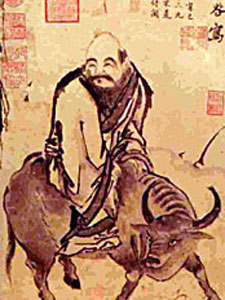
The custom of serving tea to our guests is nearly as old as recorded history, a vital part of the tradition of sharing who we are. The earliest reference to tea offered by a host to an honored guest comes to us from the Taoists of China. Around 500 BC, during the Chou Dynasty in China, corruption and folly were bringing about the collapse of the kingdom. According to legend, there lived at this time Lao Tse, a man not only of high rank, but of great wisdom, a true sage. Having no wish to witness the decline of civilization, Lao Tse decided to take his leave from the peopled world. He intended to go to the mountains and live out his days there as a hermit. Heading west, he traveled through the Han Pass, where a gatekeeper named Yin Hsi resided. Legend recounts that Yin Hsi, a sage in his own right, had been waiting for many years in his grass hut at the pass, anticipating that one day an Immortal such as Lao Tse would come this way. In order to entice the master to tarry long enough to share his wisdom, the gatekeeper ceremoniously served Lao Tse a cup of tea. Thus, the well-loved and highly revered Taoist the Tao-te-Ching, also known as "The Way of Life," was born, transmitted over a cup (or two) of tea. This was the auspicious birth of tea's role in hospitality.
Hospitality Is Connecting with Others
When we gather together with others in the making and serving of tea, something essential happens. Our thoughts gravitate toward our guests' welfare: What do they need? What mood and ambience will bring them satisfaction and happiness? What tea will be most pleasing? How can I help them be most at ease?
In this process we can feel united to others, connected through the time shared over tea. In the company of our guests, we learn all that we hold in common, and we may experience a deep empathy for all of life. Through hospitality, it's possible to know the wisdom in the old saying "It is better to give than to receive."
Opening the Heart
Around the world from ancient to modern times, the way tea is served to others has demonstrated the spirit of hospitality. Although it would be lovely to write about all the tea traditions in the world, our discussion will be limited to the few that have especially touched our hearts and minds.
The practice of sharing tea with others is the essence of the Japanese tea ceremony, chanoyu. The ceremony is an enactment of "right relationship" to another in a social setting. In the role of the host or hostess, we learn a way of being that celebrates care, precision, and regard toward the well-being of others, the particular situation, and the environment. We bring mindful attention to every person, place, and thing we encounter. As we consider another's needs, our attitude shifts from self to other. As we whisk the tea and present the bowl, our body follows suit, and the peacefulness of serving tea to others infuses our being.
Sen Soshitsu, fifteenth Grand Master of the Urasenke School of Tea, knew that it was "the free and magnanimous heart that counts" in the serving and drinking of tea. It is this caring and considerate, yet tempered and moderated way of being that constitutes the demeanor of the host or hostess at a tea gathering. We serve others without servicing; we offer, without artifice; and we regulate, without controlling.
Consider this lesson in tea etiquette: once a grower invited Sen no Rikyu, the founder of the Japanese Way of Tea, to have tea. He was overjoyed at Rikyu's acceptance, and when Rikyu came for tea, the grower led him into the tearoom and served Rikyu tea himself. However, in his excitement, his hand trembled, he dropped the tea scoop, and he knocked the tea whisk over. The other guests, students of Rikyu, snickered at the tea grower's performance, but Rikyu said, "It was the finest."
On the way home, one of the students asked Rikyu, "Why were you so impressed by such a shameful performance?" Rikyu replied, "This man did not invite me with the idea of showing off his skill. He simply wanted to serve me tea with his whole heart. He devoted himself to completely making a bowl of tea for me, not worrying about errors. I was struck by that sincerity."