
The Health Benefits of Tea through History
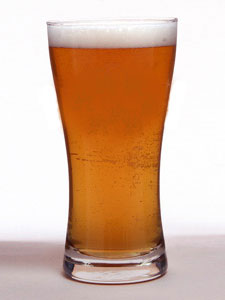

"Which is better for me, tea or beer?"
How many times have you asked yourself this very question?
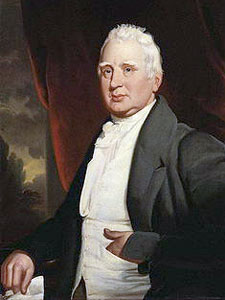
During my latest venture to keep myself abreast of tea's many health benefits, I stumbled upon a gem of an article called "The evils of tea (and the virtues of beer)." This essay, first published in William Cobbett's Cottage Economy in 1822, shows just how much of an impact serious scientific thought has had on our culture. In this 21st-century version of your favorite Tea Newsletter, we'll cover some of his more outrageous points in that essay and compare these claims with actual health benefits attributed to tea.
But before we get to Cobbett's comments, a little background history may prove helpful.
In Willy's time, most water was unfit to drink. For those who wanted to avoid disease, the choices were limited: a cup of boiled water (mmmm!) or beer that was strong enough to kill bacteria. In the beginning of the 1800's, ale was a common breakfast drink. But tea was quickly becoming a welcome alternative. It was thirst quencher that refreshed and invigorated, was full of flavor and, above all, was safe to drink. Tea was clearly a drink with great market potential - and it made the nation's brewers nervous.
The brewers' fears soon turned to active opposition. As their crusade against tea grew, others joined in. The Church denounced tea as a sinful drink; doctors claimed it was bad for health. The opponents of tea formed a powerful lobby - and they had influence in Parliament. Tea aroused strong passions. It was new and it was foreign. Worst of all, it had the potential to damage beer sales, which were produced domestically (tea was, of course, imported). The forces against tea were persuasive and virtually unstoppable. Once such voice was William Cobbett, a reactionary, a radical, a royalist, a soldier, a farmer, a bookseller, a publisher, a pamphleteer, a prisoner, and at one time even a member of Parliament.
In Cottage Economy, William declares, "I view the tea drinking as a destroyer of health, an engenderer of effeminacy and laziness, a debaucher of youth, and a maker of misery for old age." Pretty bold statements. Well Mr. Cobbett, we've discovered that tea is not only a safe stimulant (compared to, let's say, coffee), but it also leads to fewer signs of aging (unlike beer, which has been proven to dry out the skin, forming wrinkles). I must concede, though, that one of your statements is true: ever since I was a kid, I've been addicted to the stuff. Also, it has become a universal maxim: real men drink tea.
Cobbett goes on to claim that tea "is notorious that tea has no useful strength in it... It is, in fact, a weaker kind of laudanum (opium), which enlivens for the moment and deadens afterwards." Actually, tea comes from the Camellia Sinensis plant and opium comes from Papaver Somniferum—there's absolutely no relation. This ignores the obvious fact that drinking too much tea will lead to nothing more than frequent trips to the bathroom, while drinking too much beer will result in embarrassing decisions, such as joining a fraternity.
In one of the final (and undeniably my favorite) passages, Cobbett states that "it is impossible for anyone to deny of this statement. Put it to the test with a lean hog: give him the fifteen bushels of malt and he will repay you in ten score of bacon or thereabouts. But give him 730 tea messes, or rather begin to give them to him, and give him nothing else, and he is dead from hunger, and bequeaths you his skeleton, at the end of about seven days." Now, I don't have a PhD, but something tells me that there is a serious flaw in this scientific method. Tea has been proven, however, to help the body burn calories quicker, aiding weight loss—so he's correct on that point.
There are many more passages (or rantings, depending on how you look at it), but I will not barrage my faithful readers with further reading. If anyone is interested in further enrichment on this line of thought, I'd recommend renting any film by David Lynch.
By no means am I trying to put down beer—it is a perfectly harmless beverage (in moderation). But until they can come up with a tea beer, I must conclude that tea is by far the healthier of the two... No offense, Billy.
Please visit Adagio's Tea Info page for the latest summary of tea's amazing health benefits.